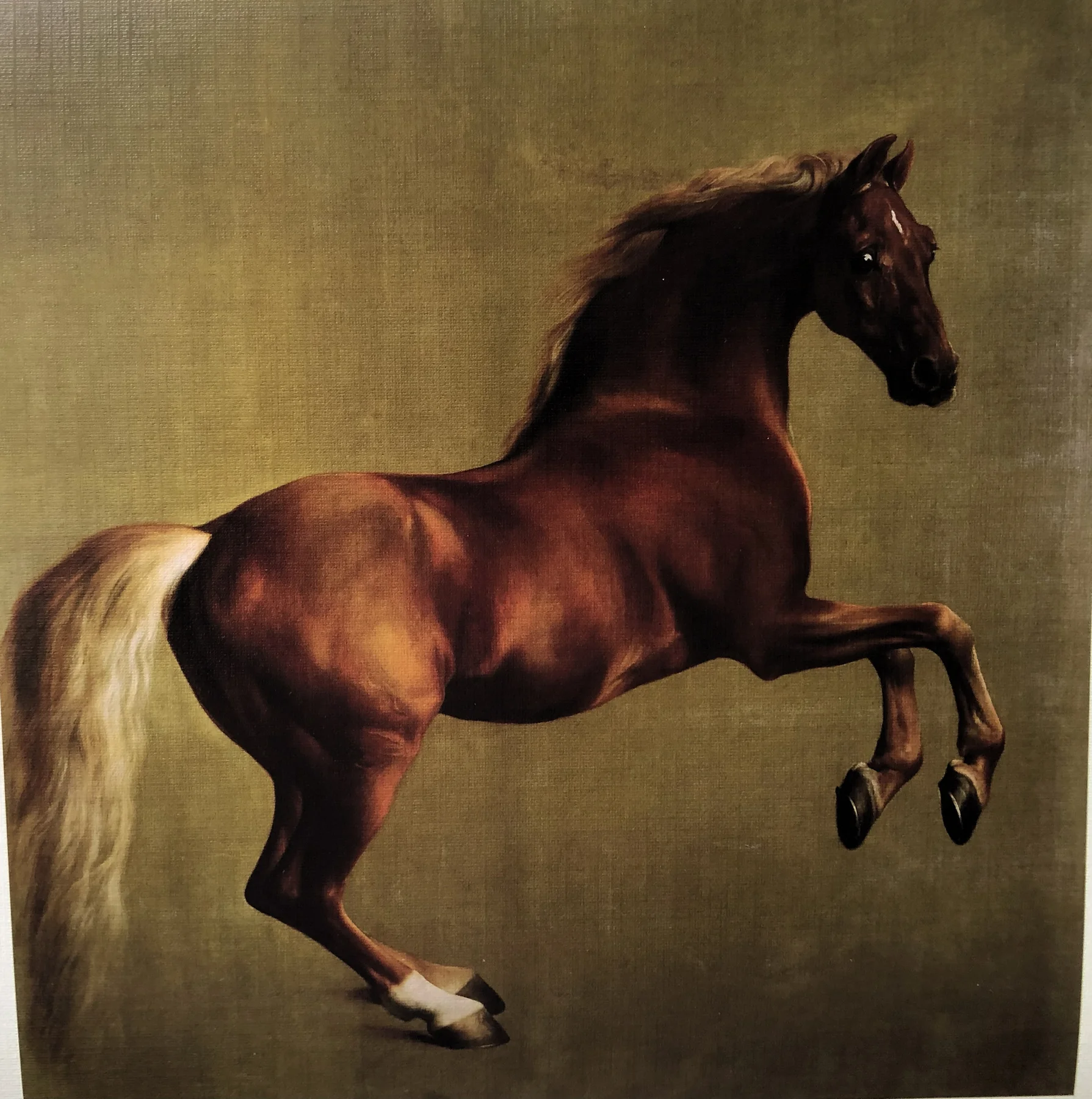
WHISTLEJACKET
George Stubbs
- Artist
- George Stubbs (1724–1806)
- Date
- 1762
- Dimensions
- 292 x 246.4 cm
- Medium
- Oil on canvas
- Location
- National Gallery, London, England
Gallery visitors stop rooted to the spot before Whistlejacket, a wonderful painting nearly 3 metres high. The work’s realism and powerful composition set it apart from similar pictures of its time — and of every other time. The spirit of the painting and the energy radiating from it live on through the ages, so the splendid horse has become immortal. After retrospective exhibitions in recent decades, the glorious Whistlejacket has found a home in the National Gallery in London.
The Painter of Horses
Horse racing enjoyed extraordinary popularity among the 18th-century English aristocracy. If a person of high social rank wanted to have his prized steeds immortalised, he naturally turned to the artist most famous for depicting horses — George Stubbs. In the case of Whistlejacket, however, reasons other than the usual pride and attachment may also have played a part.
Aristocratic Recognition
Charles Watson Wentworth, 2nd Marquess of Rockingham, commissioned many horse pictures from Stubbs, ten such works in 1762 alone. Lord Rockingham was a politician who twice held the post of prime minister in the English Parliament. According to a reliable source, the triumphant figure of George III was originally to have appeared on the horse’s back in Whistlejacket.
Opinions differ as to why the background ultimately remained neutral. Some cite political reasons and a change in Rockingham’s commitment to the monarch. Others believe that when the marquess saw the painted horse, he simply decided that the picture was perfect as it was and that the depiction would gain nothing by adding further elements. After his death Rockingham’s nephew and heir created a Whistlejacket Room in the family home, which must have been an imposing sight.
A Valuable Steed
Whistlejacket was a prize-winning horse; in August 1759 he won the 2,000-guinea race at York ahead of Mr Turner’s horse Brutus. According to contemporary accounts, the four-mile race was keenly contested throughout and decided by only a length. This was Whistlejacket’s last, triumphant run on the turf.
Whistlejacket also appears in another painting commissioned by Lord Rockingham. In Stubbs’ group picture titled Whistlejacket and Two Other Stallions with Simon Cobb, the Groom, Whistlejacket is seen separately, on the right of the composition with Cobb, giving him greater impact. Standing free without a bridle, the animal embodies independent, dignified self-assurance.
Beyond Realistic Depiction
Stubbs’ special anatomical knowledge gave his paintings unquestionable authenticity. He acquired this knowledge by drawing dissected horses: he recorded the overlapping layers of muscles, nerves, blood vessels and bones with great thoroughness from several viewpoints. Stubbs lifted and fixed the carcasses awaiting dissection in the desired position with hooks and pulleys, and the animals’ bodies sometimes remained in the same position for seven weeks.
The Inner Spirit
Stubbs knew, however, that clinically accurate depiction was not enough, so he used further master strokes: he gave sheen to the coat, mass to the body, a wild look to the eye. He breathed life into the animal. As one critic observed, Stubbs painted “as if the judges of his works were the horses themselves.” He showed respect for horses and depicted them with great understanding and empathy, which is why his works were especially enjoyed by people who had some connection with horses through their work or hobby.
- An example of 18th-century horse-racing painting
- John Sinclair: The Finish of the 1822 Epsom Derby
- The Marquess of Rockingham
- George Stubbs: Whistlejacket and Two Other Stallions with Simon Cobb, the Groom
- A plate from Stubbs’ The Anatomy of the Horse